School of Rock – Day 15 – Celebration and Reflection

Image from School of Rock film IMDB page.

SUMMARY

Throughout the class you go over topics covering the process of songwriting like melody, bass, harmonies, and rhythm. Using them, we make music with an instrument of your choice.

FINAL PROJECT

Final Rubric (Google Docs) (20 Points)

Recording became stressful but when making the musical ideas was fun.

  • 1 (NOT MY THING!)
  • 2 (not really)
  • 3 (sorta interested)
  • 4 (interested)
  • 5 (YES! – I LOVE THIS STUFF!)

Your score: 5

MICROPHONE RECORDING PROJECT

Write a couple sentences reflecting on your The Microphone Podcast Project

Editing the project in soundtrap was fun and helped meet used to the sound of my voice.

  • 1 (NOT MY THING!)
  • 2 (not really)
  • 3 (sorta interested)
  • 4 (interested)
  • 5 (YES! – I LOVE THIS STUFF!)

Your score: 4

PRACTICE ROOM (LESSONS)

Practicing the piano during this time was nice and helped m get used to doing techniques like octaves and runs.

  • 1 (NOT MY THING!)
  • 2 (not really)
  • 3 (sorta interested)
  • 4 (interested)
  • 5 (YES! – I LOVE THIS STUFF!)

Your score: 4

CLASSROOM (THEORY & ANALYSIS)

Most of the things we learned was relevant to making music and helped when making my overall composition.

  • 1 (NOT MY THING!)
  • 2 (not really)
  • 3 (sorta interested)
  • 4 (interested)
  • 5 (YES! – I LOVE THIS STUFF!)

Your score:  4

LAB (THEORY PRACTICED)

The apps used during this time helped the song writing process like when you could audition chords in hook theory.

  • 1 (NOT MY THING!)
  • 2 (not really)
  • 3 (sorta interested)
  • 4 (interested)
  • 5 (YES! – I LOVE THIS STUFF!)

Your score: 3

OUTSIDE (CREATIVITY & THE BRAIN)

The videos made me understand the brain more and the importance of sleep.

  • 1 (NOT MY THING!)
  • 2 (not really)
  • 3 (sorta interested)
  • 4 (interested)
  • 5 (YES! – I LOVE THIS STUFF!)

Your score: 4

STUDIO (SONGWRITING)

Making music was the whole reason I enrolled in School of Rock and was fun throughout. By building off of chords I could find melodies and rhythms.

  • 1 (NOT MY THING!)
  • 2 (not really)
  • 3 (sorta interested)
  • 4 (interested)
  • 5 (YES! – I LOVE THIS STUFF!)

Your score: 5

CONTROL ROOM (RECORDING & MIXING)

Recording was frustrating especially when takes didn’t sound good.

  • 1 (NOT MY THING!)
  • 2 (not really)
  • 3 (sorta interested)
  • 4 (interested)
  • 5 (YES! – I LOVE THIS STUFF!)

Your score: 3

STAGE (SHARING)

It’s not only interesting to listen to other people’s taste in music in different genres, but also to analyze the other genres and creative decisions made in the songs.

  • 1 (NOT MY THING!)
  • 2 (not really)
  • 3 (sorta interested)
  • 4 (interested)
  • 5 (YES! – I LOVE THIS STUFF!)

Your score: 5

THEATER (DOCUMENTARY & HISTORY)

It was nice to see how music was made and evolved into what it is today. It was interesting how some concepts in history affected music.

  • 1 (NOT MY THING!)
  • 2 (not really)
  • 3 (sorta interested)
  • 4 (interested)
  • 5 (YES! – I LOVE THIS STUFF!)

Your score: 3

WHAT I LEARNED and PROBLEMS I SOLVED

I learned how to make melodies and enjoyed the songwriting process. Recording was a pain when the mics would pic up other things that weren’t instruments.

THE COURSE’s ACTIVITY EVALUATION (OVERALL)

Content (The WHAT)

Rating: OK  – 1 – 2 – 3 – 4 – 5  – HIGHLY ENGAGED

Rating: 3

The most interesting content was how the brain works in the TED talks but the most relevant was the ones made about artists and how they created music. The most interesting fact I learned was that without sleep, the brain turns off certain genes that are related to memory and hyper activates genes that promotes cancer.

Process (The HOW)

Rating: OK  – 1 – 2 – 3 – 4 – 5  – HIGHLY ENGAGED

Rating: 4

I liked how it became less restricting as time went on and how some of the things were optional along with the facts that we could chose what we wanted to focus on. The class focused mostly on guitar which wasn’t the instrument that I chose so it felt somewhat restricting at times but I could just search up what I wanted to know about my own instrument. I didn’t like the audiobook at the end because it took too long to make its points and felt like a lecture we’ve all gone through before in a previous class or advisory. Maybe talk about the main points the book makes rather than having people sit through 3ish minutes to only make one point.

THEATER (DOCUMENTARY & HISTORY)

School of Rock Movie

BONUS MATERIAL

Dr. Gebrian’s Brain-Friendly Practice Ideas

Dr. Gebrian’s YouTube Playlists on Practice Techniques and Brain Research

Annie Dang’s Songwriting YouTube Channel

Annie Dang’s YouTube Resources for Songwriting and Publishing

How Years Of Gaming Affect Your Brain

https://youtube.com/watch?v=xaICKlp9kQc%3Fstart%3D634%26feature%3Doembed

Link to How Years Of Gaming Affect Your Brain by HealthyGamerGG on YouTube

School of Rock – Day 14 – Voice, Presentation, and Preparation

RESOURCES FOR THE CLASS

SUMMARY

Finished making the end of the song with all of the string parts together.

PRACTICE ROOM (LESSONS) 8:30-9AM

Practiced on some of the violin sections in the piece.

CLASSROOM (THEORY & ANALYSIS) 9-9:45AM

Work on your final composition.

Had to redo the ending piano part because it was at a tempo that I didn’t want before.

OUTSIDE – (PRESENTATION & VOICE) 9:45-10:15AM

Watch How to Speak so that people want to listen

Bonus videos to watch on your own…

Watchhow to present with power and poise

Watch Want to sound like a leader? Start by saying your name right

Great presentations have many ingredients. What makes it all work is voice, eye contact, word choice, body language, visuals, etc? Take a look at successfully presenting or pitching an idea to reveal these ingredients.

By avoiding ending sentences on a higher pitch and negative tones in conversations can make it more enjoyable for others to listen to.

LAB (THEORY PRACTICED) 10:15-11:15AM

Recorded all of the piano spots and edited them together.

LUNCH 11:15-11:45AM

STUDIO (SONGWRITING) 11:45-12:45PM

Worked on recording the violin parts at the end of the song and recording the sixteenth notes.

CONTROL ROOM (RECORDING & MIXING) 12:45-1:45PM

Soundtrap Exporting and Mixing Resources

Prepare a mix in Soundtrap, have someone from your team share it with Mr. Le Duc and Mr. Disston in Soundtrap, and export an MP3 and place it in the STAGE section below.

Edited the chords the piano plays along with the strings, so both stayed on beat together. Also, by adding reverb to the strings it helped to smooth out from note to note especially when they play sixteenth notes.

OUTSIDE – PART 2 (INSPIRATION / IDEAS) 1:45-2PM

Watch The Unfair Advantage That Introverts Have by HealthyGamerGG on YouTube

STAGE (SHARE) 2-2:30PM

Worked on cleaning up the end and recorded the final phrase the violins have together.

FINAL PROJECT ACTIVITY UPDATE

Final Rubric (Google Docs) (20 Points)

Add an audio file of the FINAL version here…

I recorded the violin section for the end of the song and added effects that would make them sound smoother like reverb.

7/15 – FINAL SONG

WHAT I LEARNED and PROBLEMS I SOLVED

Metronomes are useful, but if one section isn’t on beat but seems musically correct, you can shift other parts by doing cuts so that they all work together. Reverb can be used on background parts to make them seem smoother.

TODAY’s ACTIVITY EVALUATION

  • Give feedback on the class Content and Process
    • Participation will be part of your leadership project due at the end of the course
  • Fill in the Daily Activity Evaluation

THEATER (DOCUMENTARY & HISTORY) 2:30-3PM

Watch part of Joe Strummer: The Future Is Unwritten

School of Rock – Day 13 – Collaboration and Growth – Part 3

RESOURCES FOR THE CLASS

SUMMARY

After Anderson helped setting up the mics, I finished recording all of the piano parts for the piece and have the grounds for the song recorded and put together.

PRACTICE ROOM (LESSONS) 8:30-9AM

Practiced all piano sections to record later on today.

CLASSROOM (THEORY & ANALYSIS) 9-9:45AM

We will pick a song to analyze from…

Since the other mics from yesterday didn’t sound too good, Anderson who is collaborating with me by helping with recording and audio engineering switched some for better ones but switching them took a lot of time to do along with the EQ.

OUTSIDE (INSPIRATION / IDEAS) 9:45-10:15AM

Watch Shawn Anchor’s TED talk about happiness

    • “We believe we should work hard in order to be happy, but could we be thinking about things backward? In this fast-moving and very funny talk, psychologist Shawn Achor argues that, actually, happiness inspires us to be more productive.”  – TED.com

People who were focusing on the good things about life are more overall happy. Happiness boosts people’s motivation, speed, accuracy, and success by 31%(?).

LAB (THEORY PRACTICED) 10:15-11:15AM

Started recording most of the piano parts.

LUNCH 11:15-11:45AM

STUDIO (SONGWRITING) 11:45-12:45PM

Recorded the piano parts.

CONTROL ROOM (RECORDING & MIXING) 12:45-1:45PM

Soundtrap Exporting and Mixing Resources

(This was recorded in garage band)

OUTSIDE (INSPIRATION / IDEAS) 1:45-2PM

Some of us did stretches and wondered about if one of the walls outside was painted over to be darker because it looked different than what I remembered, and it didn’t match any of the other walls outside.

STAGE (SHARE) 2-2:30PM

Edited the song more at one of the rock stations and Disston listened to it while I was there.

FINAL PROJECT ACTIVITY UPDATE

Final Rubric (Google Docs) (20 Points)

I finally recorded all of the piano parts for the whole song!!!! Next, I need to record the string parts for certain sections and some synth notes. Maybe edit it a bit more also.

WHAT I LEARNED and PROBLEMS I SOLVED

Rather than placing held bass notes played by the piano next to each other in garage band, putting them on a separate track can allow the previous note to ring further and make it not seem interrupted.

TODAY’s ACTIVITY EVALUATION

  • Give feedback on the class Content and Process
    • Participation will be part of your leadership project due at the end of the course
  • Fill in the Daily Activity Evaluation

THEATER (DOCUMENTARY & HISTORY) 2:30-3PM

Finish RUMBLE: THE INDIANS WHO ROCKED THE WORLD

School of Rock – Day 12 – Collaboration and Growth – Part 2

RESOURCES FOR THE CLASS

SUMMARY

Write your daily summary last, at the end of the day, here… Only one to two sentences.

Started recording today and finished making the piano part for the whole song.

PRACTICE ROOM (LESSONS) 8:30-9AM

Atomic Habits Resources continued

      • Read How to Create a Good Habit and fill in the Implementation Intention Template with your own habit intention from James Clear’s Atomic Habits
      • Read Habit Stacking and fill in the Template with your own habit stack from James Clear’s Atomic Habits
      • Read Chapter 3: How to Build Better Habits in 4 Simple Steps from James Clear’s Atomic Habits
      • Read Chapter 2: How Habit Shapes Your Identity from James Clear’s Atomic Habits

Write a few key things you learned and which videos you learned from today.

Check out Paul David’s 5 great exercises for your practice routine!

Write a few key things you learned and which videos you learned from today.

Reviewed the e minor run and e major section. Continued to make more after the major section.

CLASSROOM (THEORY & ANALYSIS) 9-9:45AM

Listen to the arrangement, mixing, and production of U2’s Demo of the song Twilight and the album version of Twilight.

Write a reflection on the key differences that grabbed your attention.

Watch Max Martin’s Behind the data: the secret to songwriting

Watch What Makes This Song Great? Ep.18 MAX MARTIN

Write a reflection on the key topics that got your attention about Max Martin and his process.

Watch This Video is So Boring, You Probably Won’t Even Make it Through

Write a reflection on the key topics.

Added a second piano part that has moving lines but acts as a percussion with the chords it lands on, building up tension.

OUTSIDE (INSPIRATION / IDEAS) 9:45-10:15AM

Watch Sleep is your superpower

Journal here. The more detail, the better.

Sleep is important when remembering things and your health. Sleep has a direct affect on what genes are turned on and off.

LAB (THEORY PRACTICED) 10:15-11:15AM

Work on the collaborative composition.

Write what you focused on during this time.

Couldn’t get any farther in my piece so Anderson helped me by setting up mics to record me as I practiced.

LUNCH 11:15-11:45AM

STUDIO (SONGWRITING) 11:45-12:45PM

Watch Making a Copy of a Soundtrap Composition

Prepare a mix in Soundtrap, someone from your team shares it with Mr. Le Duc and Mr. Disston in Soundtrap, AND export an MP3 and place it in the STAGE section below.

Continued to set up mics and recorded some parts.

CONTROL ROOM (RECORDING & MIXING) 12:45-1:45PM

Soundtrap Exporting and Mixing Resources

Prepare a mix in Soundtrap, have someone from your team share it with Mr. Le Duc and Mr. Disston in Soundtrap, and export an MP3 and place it in the STAGE section below.

Write a reflection on what you did during this time frame.

Recorded sections of my piece with Anderson. Finished composing the whole piano part of the piece.

OUTSIDE (INSPIRATION / IDEAS) 1:45-2PM

Listen to Freakonomics – Where Does Creativity Come From (and Why Do Schools Kill It Off)? (Ep. 355)

Read what WYNTON MARSALIS tells his music students when they join his class…

    • “The first thing I have my students do is write a mission statement. And that mission statement has three sentences. What do I want to do, how do I achieve it, and why am I doing it? And based on that mission statement, I teach them. And I have, my fundamental teaching to them is, I want you to rise above the cycle of punishment and reward. I’m not going to reward you or punish you. This is information, and you can do what you want with this information. So, you’re always actualizing. And I always tell them, if you want to learn something I can’t stop you. If you don’t want to learn it, I cannot teach you.”

Go for a walk and think about what this podcast meant to you.

Journal here about that. The more detail, the better.

STAGE (SHARE) 2-2:30PM

Listen to a few mixes from class projects, so far…

The song was presented as if it wasn’t supposed to be taken seriously with its muddy vocals and instruments.

FINAL PROJECT ACTIVITY UPDATE

Final Rubric (Google Docs) (20 Points)

Write a couple of sentences as an update about what you completed on your ‘afternoon’ song project in this blog post section.

Started recording today and got some takes in. Recorded all of the beginning. Finished composing the whole song!

WHAT I LEARNED and PROBLEMS I SOLVED

Tell your daily story here!  Highlight what you learned and enjoyed most, and at least one problem you solved. Problem-solving is one of the most important skills you need in life. Employers want to know HOW you get stuff done as much as WHAT you get done.

The act of repeating takes for recording was a skill that felt practiced today and just going for ambitious notes can create new pathways for a song to go.

TODAY’s ACTIVITY EVALUATION

  • Give feedback on the class Content and Process
    • Participation will be part of your leadership project due at the end of the course
  • Fill in the Daily Activity Evaluation

THEATER (DOCUMENTARY & HISTORY) 2:30-3PM

Finish RUMBLE: THE INDIANS WHO ROCKED THE WORLD

School of Rock – Day 11 – Collaboration and Growth – Part 1

RESOURCES FOR THE CLASS

SUMMARY

Write your daily summary last, at the end of the day, here… Only one to two sentences.

Just keep making musical ideas and continue to play even if you don’t know what you’re playing. Made the beginning to the middle of my song and extending it from there to connect to the end. Recorded Anderson’s piece.

PRACTICE ROOM (LESSONS) 8:30-9AM

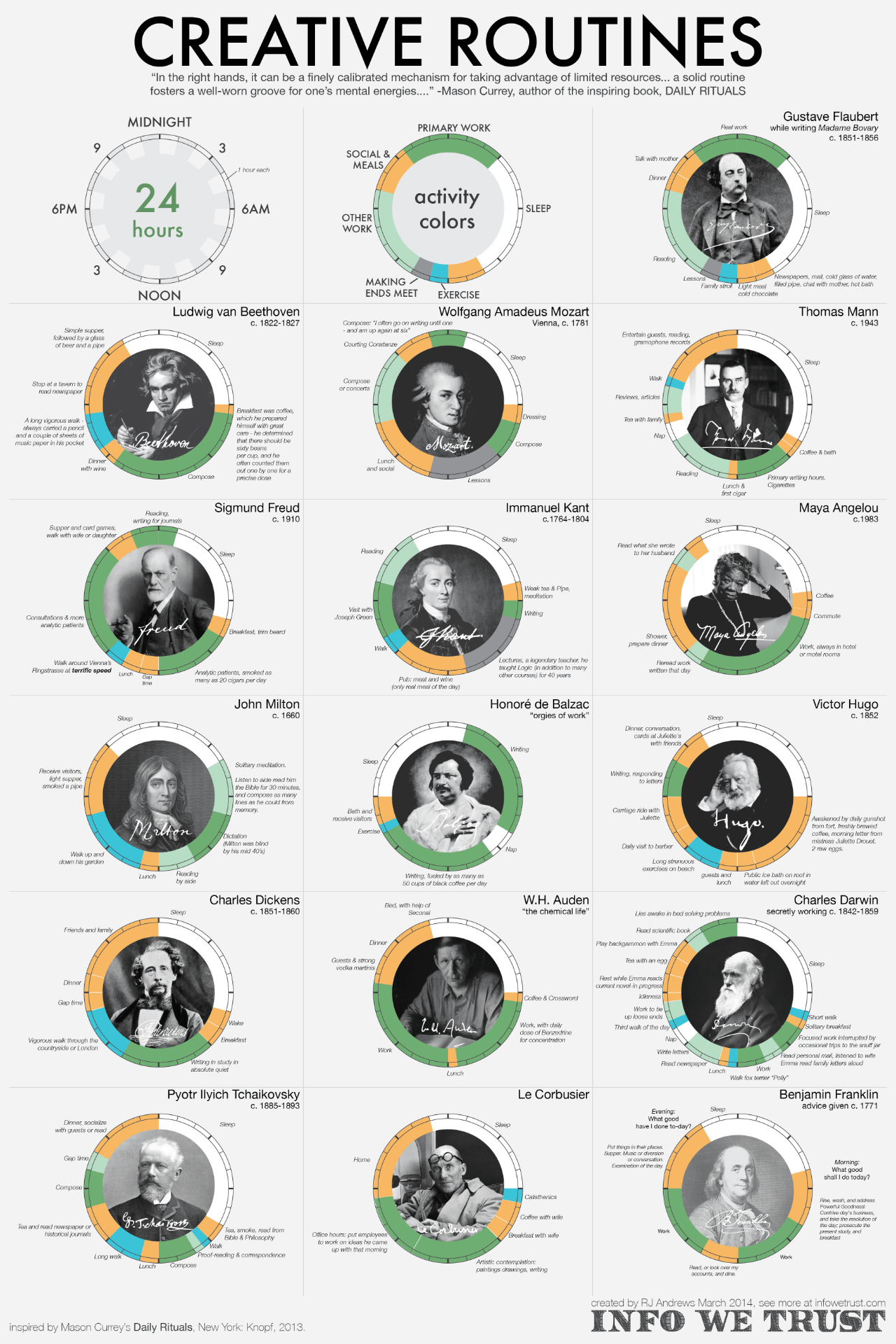
Creative Habits and Routines

Review the creative routines of some of the people below… 

Atomic Habits by James Clear

Prince and Practice Habits

Watch Prince’s guitar solo at the Rock and Roll Hall of Fame Concert

Worked on independently using my hands by doing a c major scale. Also tried to remember the melody I made yesterday off the top of my head.

CLASSROOM (THEORY & ANALYSIS) 9-9:45AM

Watch The Mistake All Beginner Songwriters Make (and how to avoid it!) by How To Write Songs on YouTube

Take notes to help you with your song creation

Listen to Radiohead’s Weird Fishes

Take notes to help you with your song creation

Don’t spend too much time on a section, just play and see how things can fit in. Keep moving forward.

OUTSIDE (INSPIRATION / IDEAS) 9:45-10:15AM

The Marshmallow Experiment and Delayed Gratification

“…a seemingly simple experiment devised by Walter Mischel to test will power: put a kid in a room with a marshmallow, and tell her if she can resist eating it for 15 minutes, she can have 2 marshmallows. It turns out the kids who could wait were much more likely to be successful as adults. “- RadioLab.org – Your Future in a Marshmallow

  • Two sources for more information on your success and delayed gratification
  • Radio Lab
  • This American Life
    • This American Life podcast Back to School
    • Listen to Act 1 from minute 3:45 to 37:00.  Then skip to Act 2 from 43:00 until the end.
    • Take notes
  • The Best Marshmallow Test on YouTube –Theo – Ten Minutes! Ten Minutes! Ten Minutes!!!!
  • Take notes on important steps to help you succeed
  • Go for a walk and think about what this video meant to you.
  • Journal here about that. The more detail the better.

DELETE ALL OF MR. LE DUC’s INSTRUCTIONS DETAILED ABOVE AFTER COMPLETING THEM\

LAB (THEORY PRACTICED) 10:15-11:15AM

Explore the tutorials for your collaborative composition and work on your final composition.

Explore SpeedSongWriting.com resources

Write a reflection on what you learned.

Made another happy waltz section that turns into e minor.

LUNCH 11:15-11:45AM

STUDIO (SONGWRITING) 11:45-12:45PM

Compose another vertical slice, 8 to 12 measures of a verse or chorus or bridge

  • This is a solo activity
  • At least 3 tracks
  • All work needs to be student-original, no loops or samples
  • Include audio effects to at least one track
  • Include a vocal track using one of the class microphones
  • You will save the audio file under the CONTROL ROOM section with a screenshot of the tracks.
  • You will share with the class during the STAGE part of the day

Write a reflection on what you did with “STUDIO” time today.

Played through and added more to my piece.

CONTROL ROOM (RECORDING & MIXING) 12:45-1:45PM

Finish the vocal and audio effects project and have ready to share with the class during the STAGE part of the day.

Embed your VERTICAL SLICE mp3 composition here. This should include multiple tracks of one song section like a verse, chorus, bridge, etc. …

Take a screenshot of your tracks by holding down COMMAND (the Windows key) + SHIFT + 4 keys at the same time and drag over the area you want to take a picture. The screenshot will be on your desktop.

Embed the screenshot in this section of the blog post.

Write a reflection on the key topics of your musical verticle slice.

Recorded more of Anderson’s song.

OUTSIDE (INSPIRATION / IDEAS) 1:45-2PM

The Secret of Musical Imposters by Cameron at Venus Theory on YouTube

STAGE (SHARE) 2-2:30PM

We will listen to some microphone recordings.

Reflect on what you heard from other students today.

The vocals were expressive and jumped pitch a lot which helped to drive the song rather than the instruments themselves.

FINAL PROJECT ACTIVITY UPDATE

Final Rubric (Google Docs) (20 Points)

Write a couple of sentences as an update about what you completed on your ‘afternoon’ song project in this blog post section.

Connected the beginning to the middle and began phrasing it.

WHAT I LEARNED and PROBLEMS I SOLVED

Tell your daily story here!  Highlight what you learned and enjoyed most and at least one problem you solved. Problem-solving is one of the most important skills you need in life. Employers want to know HOW you get stuff done as much as WHAT you get done.

When recording instruments like violin, use headphones that are being picked up by a mic. It helps yourself know how you’re being picked up and you can adjust accordingly.

TODAY’s ACTIVITY EVALUATION

  • Give feedback on the class Content and Process
    • Participation will be part of your leadership project due at the end of the course
  • Fill in the Daily Activity Evaluation

THEATER (DOCUMENTARY & HISTORY) 2:30-3:00PM

Watch RUMBLE: THE INDIANS WHO ROCKED THE WORLD

School of Rock – Day 10 – Community and Signal Processing

RESOURCES FOR THE CLASS

SUMMARY

Write your daily summary last, at the end of the day here… Only one to two sentences.

Too much reverb can make the song sound messy when mixing multiple tracks that have reverb. Practiced the beginning of my piece and tried to continue beyond that. Recorded multiple takes for Anderson’s piece.

PRACTICE ROOM (LESSONS) 8:30-9AM

Practice your instrument…

Write a few key things you learned and which videos you learned from today.

Practiced the beginning of my piece.

CLASSROOM (THEORY & ANALYSIS) 9-9:45AM

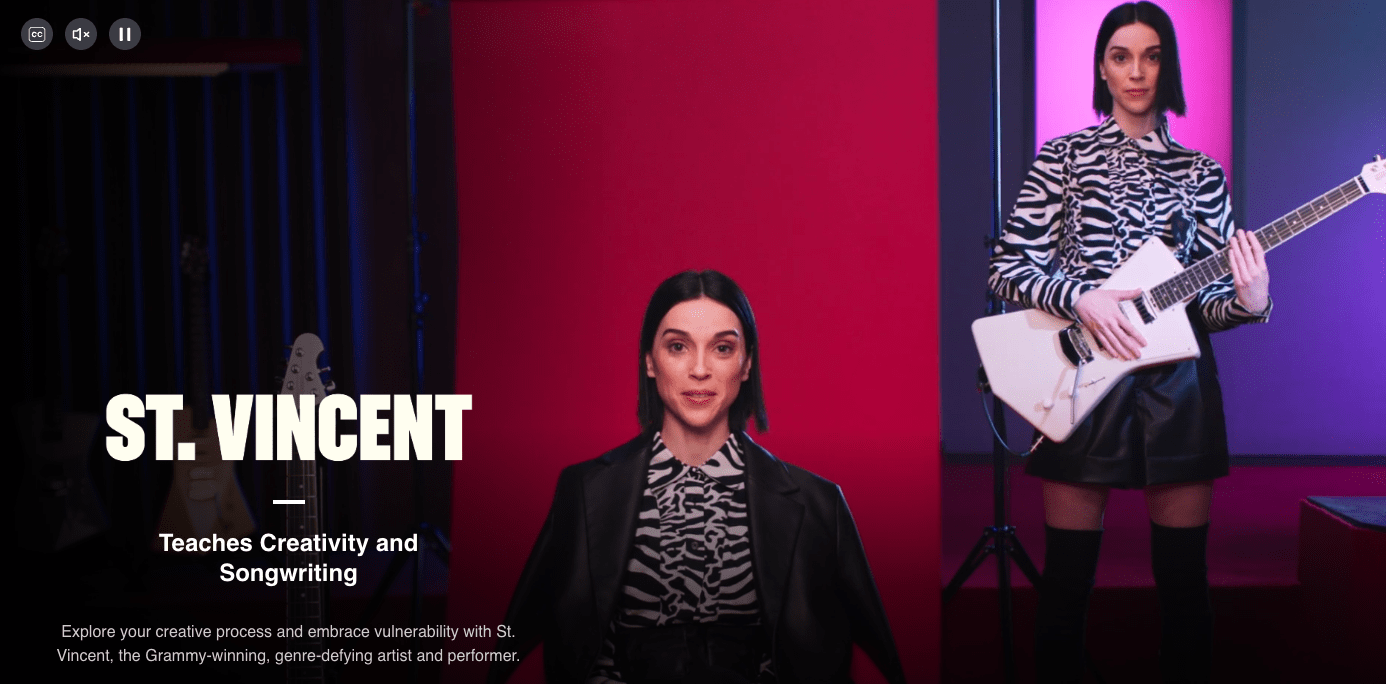
masterclass.com/classes/st-vincent-teaches-creativity-and-songwriting

Write notes under each episode below…

1. Meet Your Instructor: St. Vincent a.k.a. Annie Clark
Annie Clark, who performs under the name St. Vincent, welcomes you. She shares songwriting, guitar, and performance tips, and how to approach the world as a creative person.

2. Nun Mode: Discipline in the Creative Process
Annie shows you how joy and discipline can converge in your creative practice.

3. Every Song Needs an Epiphany
Learn how Annie creates emotional journeys in songwriting. She also explores songs by Nirvana and Leonard Cohen that have been important to her.

4. Basic Tools for Bedroom Composing
Annie shows you the setup she uses to write and record most of her music before she enters a professional recording studio.

OUTSIDE (INSPIRATION / IDEAS) 9:45-10:15AM

Listen to Brian Eno explain Scenius and the need for creative communities.

Write a few key things you learned.

Too much reverb could make mixing multiple tracks together more difficult. Use multiple octaves on different instruments.

LAB (THEORY PRACTICED) 10:15-11:15AM

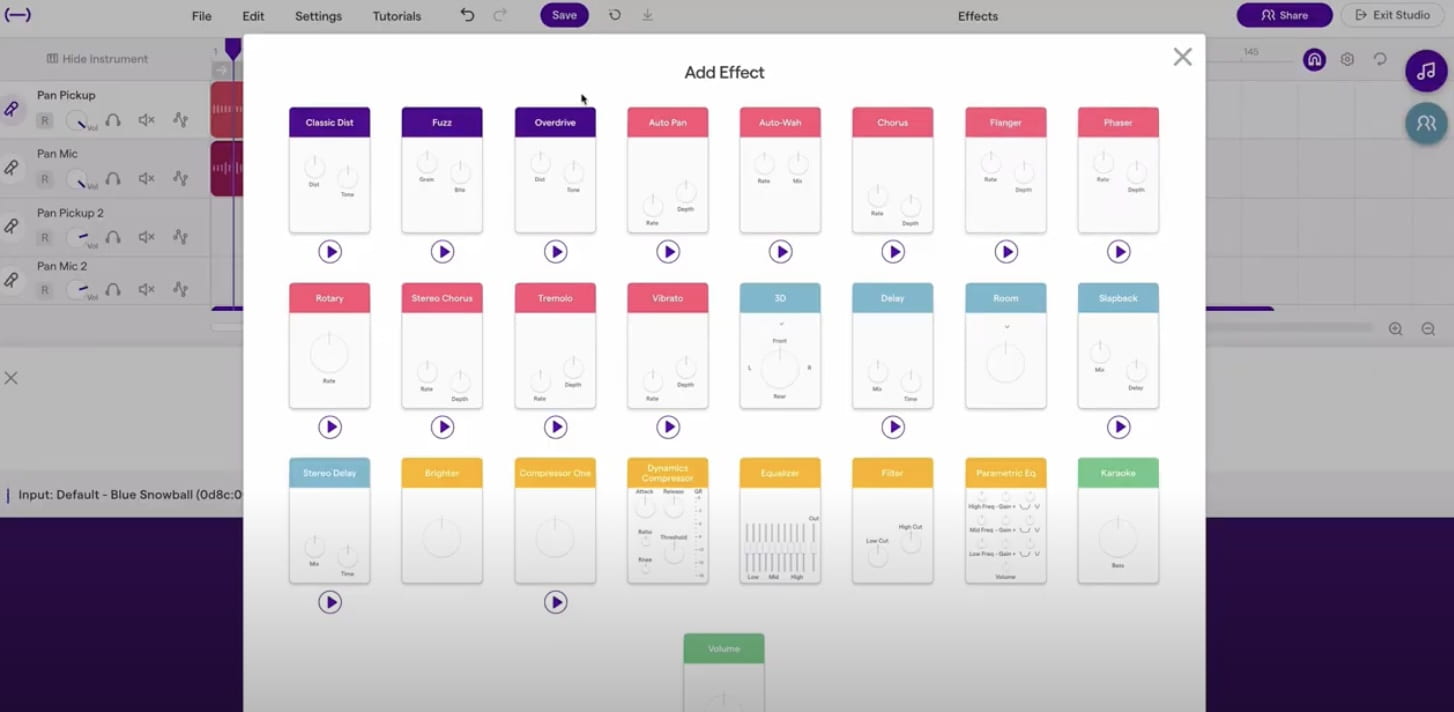
Watch the audio effects Soundtrap YouTube tutorial

Review the sound effects tutorial from Soundtrap Support

Practiced the beginning of my piece.

LUNCH 11:15-11:45AM

STUDIO (SONGWRITING) 11:45-12:45PM

Final Collaboration Composition Project

Final Rubric (Google Docs) (20 Points)

  • Embedded screenshot of all tracks with track titles showing who did what at the top of Day 14 Blog Post
  • Embedded MP3 file at the top of Day 14 Blog Post
  • 90 seconds up to 4 minutes in length
  • Have an identifiable song structure; verse, chorus, bridge, etc.
  • Foundation – The instruments that provide the groove or pulse of the song – usually drums and bass
  • Pad – Long sustaining notes that glue the mix elements together – usually organ, electric piano, strings, guitar power chords
  • Rhythm – The instruments that provide motion to the song – usually percussion, rhythm guitar
  • Lead – The focal point of the song – usually lead vocal, lead, or solo instrument
  • Fill – The instruments that fill in the spaces between the lead phrases – usually solo instruments, background vocals
  • Mixed with an attempt to have a balance of sound level volume consistent throughout the recording, not one sound excessively louder or quieter than another

Today, compose a vertical slice, 8 to 12 measures of a verse or chorus, or bridge, of a song section with multiple tracks, or as we state, a VERTICAL SLICE, and save the audio file under the CONTROL ROOM section with a screenshot of the tracks.

CONTROL ROOM (RECORDING & MIXING) 12:45-1:45PM

Embed your VERTICAL SLICE mp3 composition here. This should include multiple tracks of one song section, like a verse, chorus, bridge, etc. …

Take a screenshot of your tracks by holding down the COMMAND + SHIFT + 4 keys at the same time and dragging over the area you want to take a picture of. The screenshot will be on your desktop.

Embed the screenshot in this section of the blog post.

Write a reflection on the key topics of your musical VERTICAL SLICE.

Was recording Anderson’s piece. Anderson has the recordings.

OUTSIDE (INSPIRATION / IDEAS) 1:45-2PM

Recorded in the commons.

STAGE (SHARE) 2-2:30PM

We will work on MusicWill.org materials when ‘on stage’.

This is the performance room for sharing and playing together.

Reflect on which instrument you picked and what we played today.

The Radiohead song was mellow and used orchestration within it. The cello lasted further than any other instrument along side the vocals.

FINAL PROJECT ACTIVITY UPDATE

Write a couple of sentences as an update about what you completed on your ‘afternoon’ song project in this blog post section.

Decided the beginning hook melody and practiced it but I’m not sure on how I should continue it.

WHAT I LEARNED and PROBLEMS I SOLVED

Most of the day was spent in front of an instrument, either composing or recording for Anderson.

  • Give feedback on the class Content and Process
    • Participation will be part of your leadership project due at the end of the course
  • Fill in the Daily Activity Evaluation

THEATER (DOCUMENTARY & HISTORY) 2:30-3PM

Watch RUMBLE: THE INDIANS WHO ROCKED THE WORLD

School of Rock – Day 9 – Microphones and Workflow

RESOURCES FOR THE CLASS

SUMMARY

Write your daily summary last, at the end of the day, here… Only one to two sentences.

Did the microphone project and started making the beginning of my piece.

FINAL PROJECT ACTIVITY PROGRESS

  • Write one descriptive paragraph detailing WHAT YOU PLAN TO DO for your FINAL COMPOSITION
  • Add your idea to the class Padlet board for the final project, https://bit.ly/2ZxekGt

PRACTICE ROOM (LESSONS) 8:30-9AM

Practice your instrument…

You may use some of the resources below…

Started making a hook for the beginning with a e minor run that turns into d minor.

CLASSROOM (THEORY & ANALYSIS) 9-9:45AM

Watch I Recorded an Entire Song on ONE MICROPHONE (Yes, Drums Too)

Take notes to help you with your song creation

The Microphone Audition Project

  • Copy, paste, and publish the Microphone Podcast Project blog post template in your blog, https://mrleduc.edublogs.org/2022/01/15/microphone-auditions-project/
  • Mr. Le Duc will record you in the Sound Room in front of several professional microphones and save the recording in Soundtrap today or tomorrow
  • You will edit the files, add an introduction recording, add a conclusion recording to the podcast file, and embed the MP3 of the combined recordings with even volume levels and any reading errors edited out, into the Microphone Auditions Project blog post.

OUTSIDE (INSPIRATION / IDEAS) 9:45-10:15AM

  • Watch Why Finding Purpose Is SO HARD Today – Healthy Gamer
    • Watch from 13:19 minutes for about 5 minutes
  • Go for a walk and think about what this video meant to you.
  • Journal here about that. The more detail, the better.

LAB (THEORY PRACTICED) 10:15-11:15AM

  • Experiment with microphones at your workstations. Record a track. Experiment with recording levels and effects.

Mic project.

LUNCH 11:15-11:45AM

STUDIO (SONGWRITING) 11:45-12:45PM

Finish the Microphone Audition Project and blog post.

In case you didn’t copy and paste the project post template two days ago, https://mrleduc.edublogs.org/2022/01/15/microphone-auditions-project/

mic project.

CONTROL ROOM (RECORDING & MIXING) 12:45-1:45PM

Finish the Microphone Audition Project and blog post.

Worked with Anderson to set up the instrument mics and started making a melody for the beginning of my piece.

OUTSIDE (INSPIRATION / IDEAS) 1:45-2PM

What Makes This Song Great Analysis

https://youtube.com/watch?v=mrJ0xnXv_IQ%3Ffeature%3Doembed

STAGE (SHARE) 2-2:30PM

We will practice again, this time as bands collaborating with others, or working solo.

  • We will work on MusicWill.org materials when ‘on stage’.
  • This is the performance room.

The song never changed the tone or mood throughout the whole thing and was way too long without the change.

WHAT I LEARNED and PROBLEMS I SOLVED

  • Tell your daily story here!  Highlight what you learned and enjoyed most, and at least one problem you solved. Problem-solving is one of the most important skills you need in life. Employers want to know HOW you get stuff done as much as WHAT you get done.

The music making process and finding a melody to go with the d minor chord progression wasn’t a quick process. Persevering through helped me understand what ideas I want to use in my melody.

TODAY’s ACTIVITY EVALUATION

  • Give feedback on the class Content and Process
    • Participation will be part of your leadership project due at the end of the course
  • Fill in the Daily Activity Evaluation

THEATER (DOCUMENTARY & HISTORY) 2:30-3PM

Watch part of the The Pedal Movie documentary

Microphone Auditions Podcast Project

Summary

Went through several mics and recorded my voice in each. I also edited out all the mistakes I made in the recording including cutting out dead space in Soundtrap.

Microphone Audition Podcast

My Favorite Microphone

I liked the sennheiser e609 because it isolated my voice and felt like none of the sound was escaping or there wasn’t any ambient sounds.

Sennheiser e609

Terms and Concepts

  • Microphones
    • Dynamic – The sound waves themselves create the electrical signal by moving the membrane diaphragm of the microphone. Very popular and very well known. It is good for the low and middle range, NOT the high range.
    • Condenser – The membrane has an electrical current that waits for sound. When the sound waves hit it, it responds instantly. They are all over the place, but they need an electrical charge {amplifier} from something {battery}.
  • Polar Patterns
    • Omni – Picks sound up from all directions equally. This is used for interviews because it can pick up more than one person, without having to have two separate mics.
    • Cardioid – Picks up one half of the microphone, also known as a ‘directional mic’. Most sensitive in the front, about 180 degrees. Shaped like a heart.
    • Bi-directional – ‘Figure of 8’, picks the front and behind of the mic, but the 90-degree angle on both sides does not get picked up.
  • Transduction – Converts one form of energy to another.
  • Voltage – An electric force or a potential difference shown in volts.
  • Phantom Power – Activates the condenser in a microphone. DC powered mostly between 12 and 48 DC voltages.
  • Sensitivity – Voltage at its known sound level. It can be called by its voltage or decibels. A higher number indicates greater sensitivity; most values are negative. Sound pressure.
  • Frequency Response – The range of sound the microphone can produce and how sensitive it is within the range. You want it nice and flat.
  • Transient – A variation in current, voltage, or frequency.
  • Placement – Placement of the microphone is key; depending on the sounds you want, it can just be the distance from you or the instrument from the microphone. This part of the microphone can affect others emotionally in a way to connect with the audience.
  • Proximity Effect – Decreased sensitivity to low mics, which reduces background noise and vibration, and counteracts when used very close to the source.
  • Output – A place where the sound leaves the system.
  • Characteristics – This is the Relative Response and Frequency measured in a Hertz graph to show how good or bad the microphone is. This can show the quality of the mic.
  • Noise Rating – The signal (sound source) to noise ratio measured in decibels (dB). Noise is any sound in the background you don’t want. Electricity vibrates at 60dB, so you want the ratio of the signal and noise to be higher than that. Preferably 90dB or higher.
  • Hardware
    • Clips – A clip is something that you use to hold a microphone on something (for example, a stand), but using the wrong kind of clip can affect the performance; make sure it is tight so it has the correct effect.
    • Stands – This ties in with a clip; this is what the clip will connect to. This keeps the microphone towards the object you want to hear without having to hold it or keep it still.
    • Windscreen – Something that covers and protects the microphone, mostly a foamy material.
    • Direct Box – A device used to connect an instrument directly to the audio mixer.

What I Learned and Problems I Solved

I forgot that when changing the volume, the volume doesn’t move with the tracks so I had to move them manually. Using control and the mouse I could zoom in or out.

School of Rock – Day 8 – Goal Planning and Preparation

RESOURCES FOR THE CLASS

SUMMARY

Write your daily summary last, at the end of the day here… Only one to two sentences.

Started by stretching my fingers and recording the audio assignment. Created a chord progression for an a minor section and added a little melody to it.

PRACTICE ROOM (LESSONS) 8:30-9AM

Pick one from below … or choose your own lesson and try it…

Who is your teacher?

These stretches improve hand health and ability to move more relaxed when playing. After doing the stretches I created a new chord progression for the beginning of my song.

CLASSROOM (THEORY & ANALYSIS) 9-9:45AM

Watch The Half Year Reset: how to turn your year around by Struthless on YouTube

Pick one song from below, watch, and write a reflection

Billie Eilish uses vocal harmonies as a way to build the music. She also follows horror in her music videos with similar things you would see in famous horror movies. Make music that has emotion in it. Worked on a transition between d minor and e minor.

OUTSIDE (INSPIRATION / IDEAS) 9:45-10:15AM

LAB (THEORY PRACTICED) 10:15-11:15AM

Practiced the e minor run across the piano while working on the transition between a minor to e minor.

LUNCH 11:15-11:45AM

STUDIO (SONGWRITING) 11:45-12:45PM

Masterclass Article

Oblique Strategies Cards by Brian Eno

Holistic Songwriter

Pick one from below, watch, and write a reflection

  • Watch Holistic Songwriting: Songwriting Corner
  • Watch Holistic Songwriting: Songwriting Exercises (you do not need the cards)
  • Watch Holistic Songwriting: 5 Minute Lessons (you do not need the cards)
  • Embed a YouTube video link or links you watched
  • Write what was most interesting to you

Music Machine Songwriting “System”

Write what was most interesting to you.

Made a melodic section for the intro/middle section.

CONTROL ROOM (RECORDING & MIXING) 12:45-1:45PM

Pick one from below, watch, and write a reflection

Rehearsed Anderson’s piece and got the mics set up.

OUTSIDE (INSPIRATION / IDEAS) 1:45-2PM

Crybaby: The Pedal that Rocks the World

Watch a few minutes of the video and…

Go for a walk and think about what this video meant to you.

Journal here about that. The more detail, the better!

STAGE (SHARE) 2-2:30PM

  • Work on MusicWill.org materials when ‘on stage’.
  • This is the performance room.
  • Reflect on which instrument you picked to work on first.

The song had a mixed genre of j-pop and jazz.

WHAT I LEARNED and PROBLEMS I SOLVED

  • Tell your daily story here!  Highlight what you learned and enjoyed most, and at least one problem you solved. Problem-solving is one of the most important skills you need in life. Employers want to know HOW you get stuff done as much as WHAT you get done.

I wanted to change the start chord on a minor instead if e minor which is present in majority of the song. The tonic at the end when releasing the tension wouldn’t release fully so using lower nots in a minor helped to resolve it better.

TODAY’s ACTIVITY EVALUATION

  • Give feedback on the class Content and Process
    • Participation will be part of your leadership project due at the end of the course
  • Fill in the Daily Activity Evaluation

THEATER (DOCUMENTARY & HISTORY) 2:30-3PM

School of Rock – Day 7 – Songwriting Structure

RESOURCES FOR THE CLASS

SUMMARY

Write your daily summary last, at the end of the day, here… Only one to two sentences.

I was able to practice both my left and right hand on a piano and made a beginning melody with it.

PRACTICE ROOM (LESSONS) 8:30-9AM

Screenshot from Mary Spender’s YouTube Channel

Watch Mary Spender: Powerful advice from 10 Professional Musicians you need to hear (14:15)

Screenshot from JustinGuitar.com

Start his 117 Free Lessons YouTube Playlist

Start the series of videos, follow his directions, and check out his website, justinguitar.com.

Set a timer.  Maybe an hour a day?  The first 10 videos take less than an hour.

Write a few key things you learned and which videos you learned from today.

Found piano filters that allowed a deep bass to be played on Soundtrap. Worked on doubling hands on the keyboard, left hand playing chords while the right playing the melody.

CLASSROOM (THEORY & ANALYSIS) 9-9:45AM

Song Exploder and U2 songwriting

Link to the episode

Write your reflection here…

From the violence from their childhood, the creator of the song used that experience to create the song. The feelings from his childhood are expressed by the tone of the vocals and even the instrumentation.

How to Scare a Mouse and Soing Structure

Mr. Le Duc shared a passage from the book Hit Makers by Derek Thompson, https://www.goodreads.com/book/show/30901608-hit-makers

It highlighted the patterns that people and mice need to reset their attention. Here are screenshots of the passage.

Write your reflection here…

People tend to get bored after listening to the same thing over and over so switch up how you’re doing things in a song.

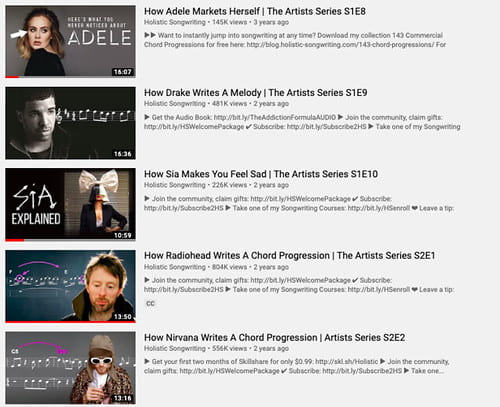
Holistic Songwriting by Friedemann Findeisen

Screenshot from Holistic Songwriting’s Channel at YouTube

Write your reflection here…

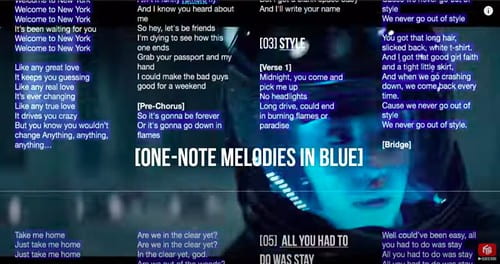
Single note melodies don’t work on a piano but do work in modern pop with repeating rhythms.

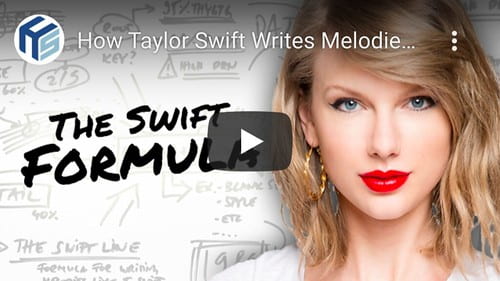
An Example: The Swift Formula – One Note Melodies

From Holistic Songwriting’s How Taylor Swift Writes Melodies at YouTube
From Holistic Songwriting’s How Taylor Swift Writes Melodies at YouTub
From Holistic Songwriting’s How Taylor Swift Writes Melodies at YouTube

Write a reflection on the key topics that got your attention.

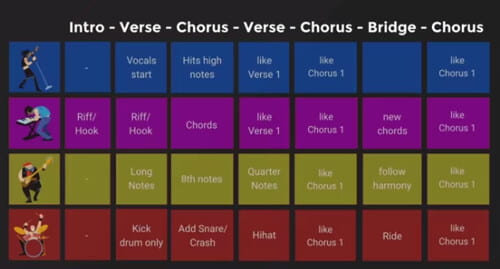
Don’t tell your emotions, express them. Twenty One Pilots uses dark humor lightly in their songs to grab attention from their target audience. One pitch melodies shouldn’t work, but in modern pop they do. Switch rhythms and beats regularly so that people don’t get bored.

OUTSIDE (INSPIRATION / IDEAS) 9:45-10:15AM

Screenshot from Jane McGonigal’s SuperBetter TED Talk on YouTube

Watch Jane McGonigal: The game that can give you 10 extra years of life.  (20 minutes)

Go for a walk and think about what this video meant to you.

Journal here about that. The more detail the better!

LAB (THEORY PRACTICED) 10:15-11:15AM

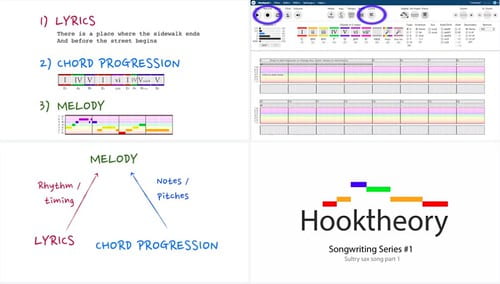
Screenshot of Lyrics Melody and Chord Progressions from HookTab at YouTube

Explore the tutorials (but you do not need to watch all of them – just pick what looks interesting to you) from the:

Write a reflection on what you learned.

Watched the chord progression video while following along creating some in garage band.

LUNCH 11:15-11:45AM

STUDIO (SONGWRITING) 11:45-12:45PM

Screenshot from Holistic Songwriting at YouTube

Watch Holistic Songwriting: Do THIS with every song you write | Hit Song Architect S1E3

Explore Song Writing “Systems”

Write what was most interesting to you learned.

Practiced piano runs of the ending of my composed song, changing little details.

CONTROL ROOM (RECORDING & MIXING) 12:45-1:45PM

Soundtrap mixing and publishing at Clark Eagling’s YouTube Channel

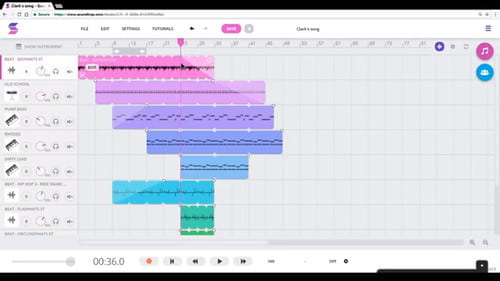
Watch Clark Eagling: Soundtrap tutorial 5 – Arranging the song, Mixing and adding effects

Watch all five videos in the playlist, if you are interested.

Write a reflection of the key topics that grabbed your attention.

Started making the beginning of the song by using the same chord progression at the end.

OUTSIDE (INSPIRATION / IDEAS) 1:45-2PM

RadioLab podcast Behaves So Strangely 

Write your reflection here…

Reflecting on stories I’ve been told by siblings about things that happened while I was younger.

STAGE (SHARE) 2-2:30PM

We will work on MusicWill.org materials when ‘on stage’.

This is the performance room for sharing and playing together.

Reflect on which instrument you picked and what we played today.

I wish they used the same vocal tone they used when building at the climax of the song, inferring the tension. The song also never resolved the tension at the end.

WHAT I LEARNED and PROBLEMS I SOLVED

Tell your daily story here!  Highlight what you learned and enjoyed most and at least one problem you solved. Problem-solving is one of the most important skills you need in life. Employers want to know HOW you get stuff done as much as WHAT you got done.

I couldn’t make the beginning of my song easily, so I copied the ending chord progression and created a similar but different melody for the end.

TODAY’s ACTIVITY EVALUATION

  • Give feedback on the class Content and Process
    • Participation will be part of your leadership project due at the end of the course
  • Fill in the Daily Activity Evaluation

THEATER (DOCUMENTARY & HISTORY) 2:30-3PM

It Might Get Loud